
I’m very excited about humanoid robots after progamming one some time back. With the buzz around AI, I feel even more excitement on the prospects of humanoids. These robots are cool because they look a bit like us and can do some incredible stuff. Watch a video on how I programmed a humanoid robot as a resident developer at the Goethe-Institut Accra. If we advance robotic hardware technology faster and significantly cut down the cost, we could usher in a human-robot world in the next decade.
What are Humanoid Robots
Humanoid robots are advanced machines designed to resemble the human form and possess the ability to perform tasks and interact with their environment in a manner akin to human capabilities. These robots typically feature a bipedal structure, human-like limbs, and sensory systems that enable them to perceive and respond to their surroundings. Humanoid robots are developed for various applications, including education, healthcare, research, entertainment, and industry, with the aim of replicating human-like movements, behaviours, and interactions, thereby bridging the gap between science fiction and real-world robotics.
The History of Humanoid Robots
The thought about humanoids have been around for some time. People dreamed about robots in stories and books. But the real adventure started in the 20th century. I will briefly mention some of the most important robots and robotic events below here:
- Early Concepts (Ancient Times – 18th Century): The concept of humanoid robots can be traced back to ancient mythology and folklore, with tales of automata brought to life by gods and magicians. In the 18th century, clockwork automata gained popularity in Europe, showcasing intricate mechanical movements and human-like appearances.
- Industrial Revolution (19th Century): During the Industrial Revolution, mechanical technology advanced rapidly, leading to the creation of early industrial robots. These machines were often designed for specific tasks and lacked human-like appearance or mobility.
- Early 20th Century: Science fiction literature, including works by Isaac Asimov (my favourite science fiction writer) and Karel Čapek, introduced the term “robot” and popularized the idea of intelligent machines. These robots, however, were typically not humanoid in form.
- WABOT-1 (1973): Waseda University in Japan unveiled WABOT-1, one of the earliest true humanoid robots. It had the ability to walk on two legs and grip objects, representing a significant leap in humanoid robot development.
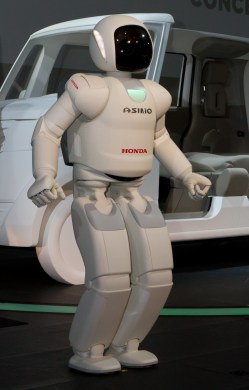
- ASIMO (2000): Honda’s ASIMO made its debut, capturing global attention. ASIMO could walk, run, climb stairs, and interact with humans, showcasing impressive mobility and communication skills.
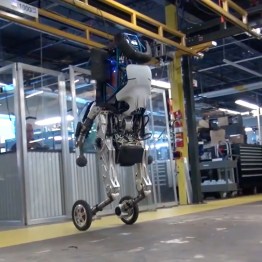
- Recent Advancements (21st Century): The 21st century witnessed remarkable advancements in humanoid robotics. Companies like Boston Dynamics developed robots such as Atlas, known for its agility, and Handle, a mobile warehouse robot. Engineered Arts developed Ameca, and Hanson robotics developed Sophia, the first robot to be granted citizenship. SoftBank Robotics introduced Nao (I will talk more on this in subsequent posts) and Pepper, designed for education and customer service, respectively.
Current Applications of Humanoid Robots
- Education: Humanoid robots serve as interactive tools in classrooms, assisting teachers in engaging students and simplifying complex concepts.
- Healthcare: Robots aid in patient care, rehabilitation exercises, and offer companionship to the elderly, improving the quality of healthcare services.
- Robotics Research: Humanoid robots are invaluable in robotics research, enabling the study of human movement, cognition, and social interaction.
- Entertainment: They captivate audiences with their agility and charm, making appearances in theme parks, special events, and entertainment shows.
- Retail: Humanoid robots enhance customer experiences in retail stores by providing assistance, answering queries, and guiding shoppers.
- Hospitality: In hotels and other hospitality settings, robots assist with guest services, check-ins, and room service, enhancing overall guest experiences.
- Manufacturing: Some industries employ humanoid robots for tasks that require human-like dexterity and precision, such as assembling small electronics components.
- Customer Service: They are used in customer service centres to answer questions and provide information, streamlining customer interactions.
- Social Companionship: Humanoid robots offer companionship and emotional support to individuals, especially those who may be lonely or isolated.
- Public Spaces: They can be found in airports and malls, guiding visitors, providing information, and ensuring public safety.
Challenges in building humanoid robots
- Complex Mechanical Design: Creating a humanoid robot with lifelike movements and dexterity requires intricate mechanical design, often involving numerous joints and components.
- Balance and Stability: Achieving balance and stability on two legs, like a human, is a significant challenge to prevent falls and ensure safe operation.
- Power and Energy Efficiency: Humanoid robots need efficient power sources and energy management systems to operate for extended periods without frequent recharging.
- Sensory Perception: Equipping robots with advanced sensors for perception, including vision, touch, and proprioception, is essential for interacting with the environment.
- Software and AI: Developing sophisticated software and AI algorithms is necessary to enable autonomous decision-making, navigation, and adaptation to dynamic environments.
- Cost: The development and construction of humanoid robots can be expensive, limiting accessibility and widespread adoption.
- Ethical Concerns: The ethical implications of humanoid robots, especially in contexts involving human-robot interactions and decision-making, need careful consideration.
- Human-Robot Interaction: Ensuring safe and natural human-robot interaction, including physical contact and communication, is a significant challenge.
- Size and Weight: Achieving a compact and lightweight design while maintaining functionality is crucial for practical use in various settings.
- Durability and Reliability: Humanoid robots need to withstand wear and tear, operate reliably, and have a long lifespan, especially in commercial and industrial applications.
- Regulatory Compliance: Complying with regulatory standards and safety requirements for robotics can be complex and time-consuming.
- Cognitive Abilities: Replicating human-like cognitive abilities, such as problem-solving and learning, poses a considerable challenge.
- Real-World Adaptation: Adapting to unpredictable real-world scenarios, including uneven terrain and dynamic environments, requires advanced perception and decision-making capabilities.
Future of Humanoid Robots
The prospects of humanoid robots truly excite me. They will boost productivity and safety in fields such as manufacturing and healthcare. In education, they will serve as dynamic tools for interactive learning and training. Still in healthcare, they can be used to support the lives of the elderly and individuals with disabilities, offering companionship. Their role in research and development will deepen our understanding of human behaviour and mobility, driving advancements in both robotics and human sciences. Whether as entertainers, customer service agents, or personal assistants, humanoid robots are set to enhance our daily experiences. As technology advances, they are expected to become more affordable and accessible.
Meet Some Fascinating Humanoid Robots
- Asimo by Honda: He’s a walking, talking friend who can do lots of things.
- Atlas by Boston Dynamics: This guy is all about crazy moves, like parkour.

- Baxter by Rethink Robotics: He’s the friendly robot who works with us.

- Digit by Agility Robotics: Eka can move and carry things, like a helpful assistant. It is made for work.

- Ameca by Engineered Arts: Great at conversations and interactions.

- Sophia by Hanson Robotics: First robot to be granted citizenship, it is highly social.

- Handle by Boston Dynamics: Handle is super strong and great for moving stuff around.
- Mitra by PAL Robotics: She’s the friendly robot who helps you in stores.

- Nao by SoftBank Robotics: Nao is the robot buddy for learning and fun.

- Pepper by SoftBank Robotics: Pepper is your helpful friend for different places.

These robots are amazing in their own ways. Whether they’re helping us learn, working alongside us, or just being friendly, humanoid robots are turning science fiction into reality. Exciting, right?
Conclusion
So there you have it, the world of humanoid robots in a nutshell. They’ve come a long way, and there’s so much more to explore. Whether they’re teaching us, helping us, or simply keeping us company, these robots are making our lives more interesting and showing us that the future is closer than we think.
Add a Comment